Engineering a High-Performance Solar Solution for a Coastal Environment
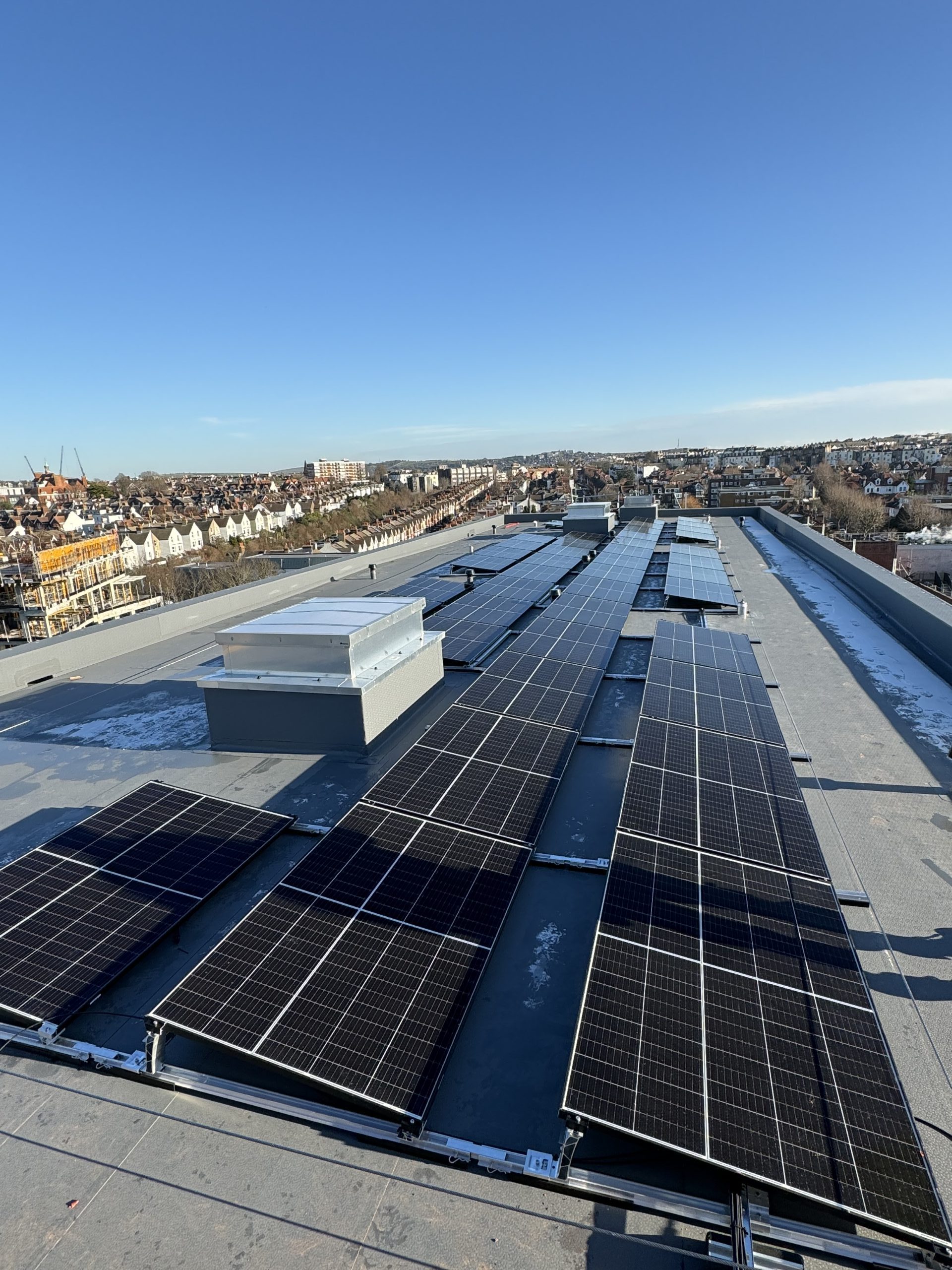
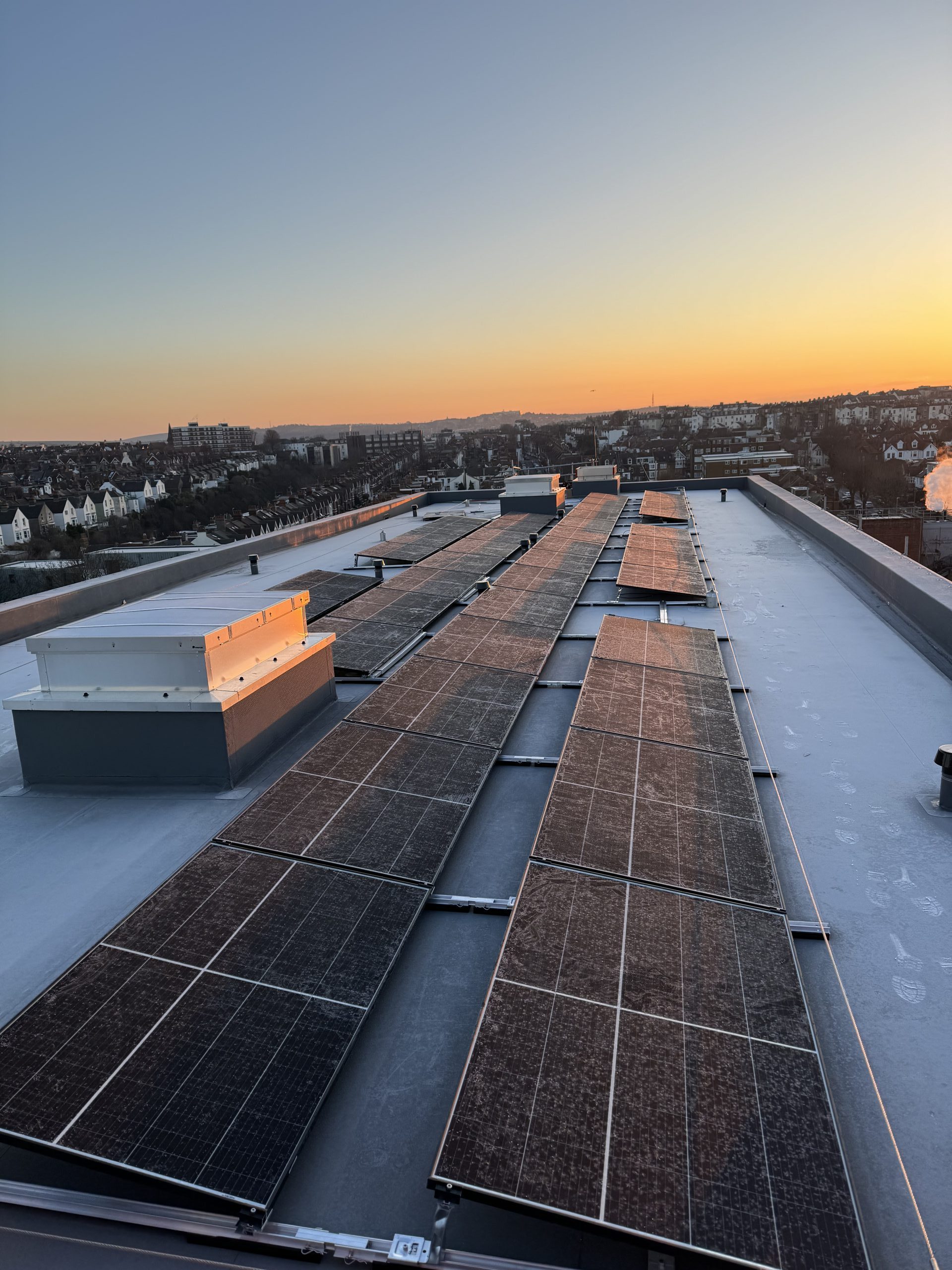
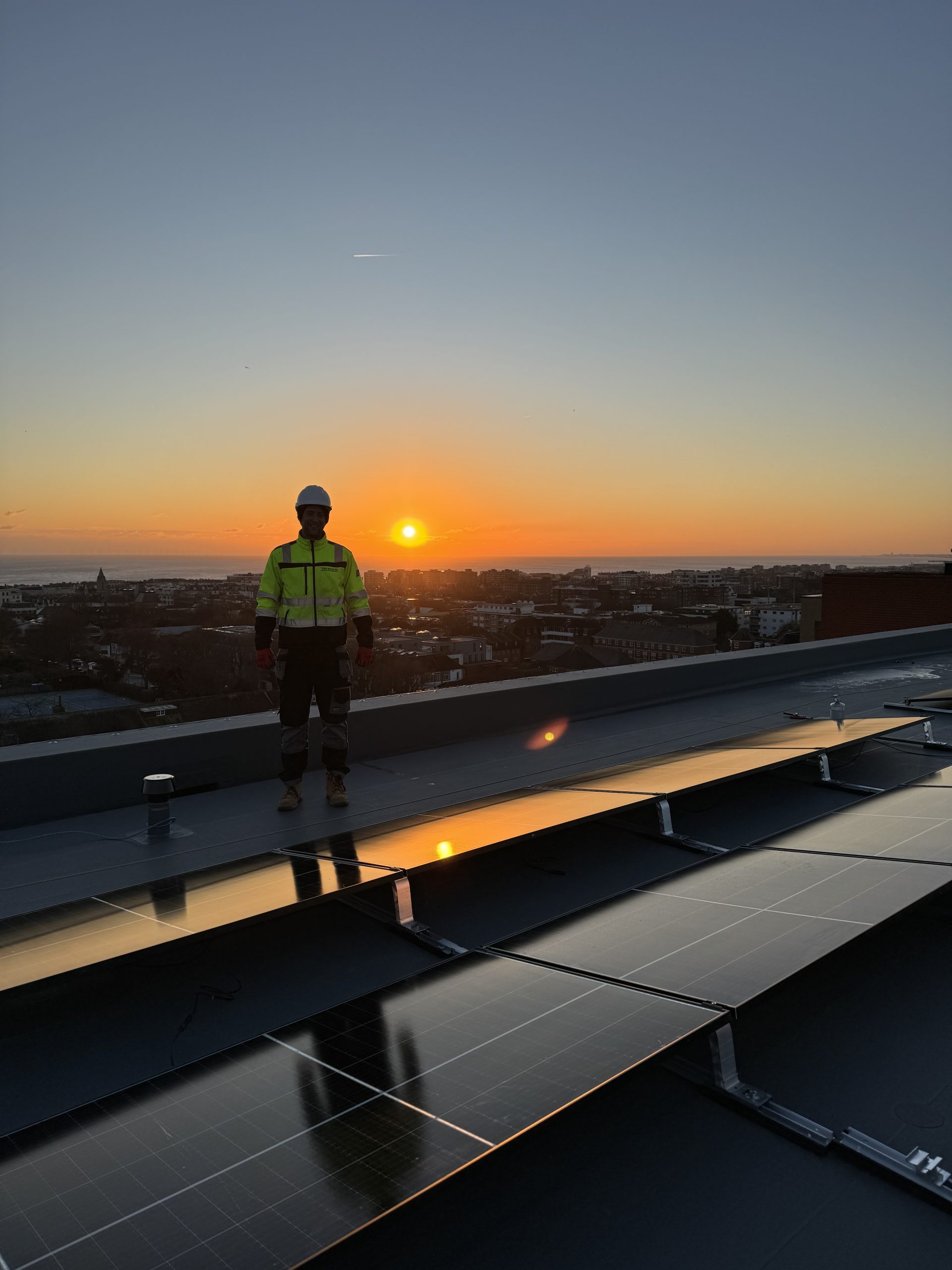
Sustainable Energy Services (SES) recently completed the design and installation of a large commercial flat roof solar PV system in Brighton, East Sussex. Due to the building’s exposed coastal location, careful consideration was given to wind loading and structural performance to ensure a safe, compliant and long-lasting installation.
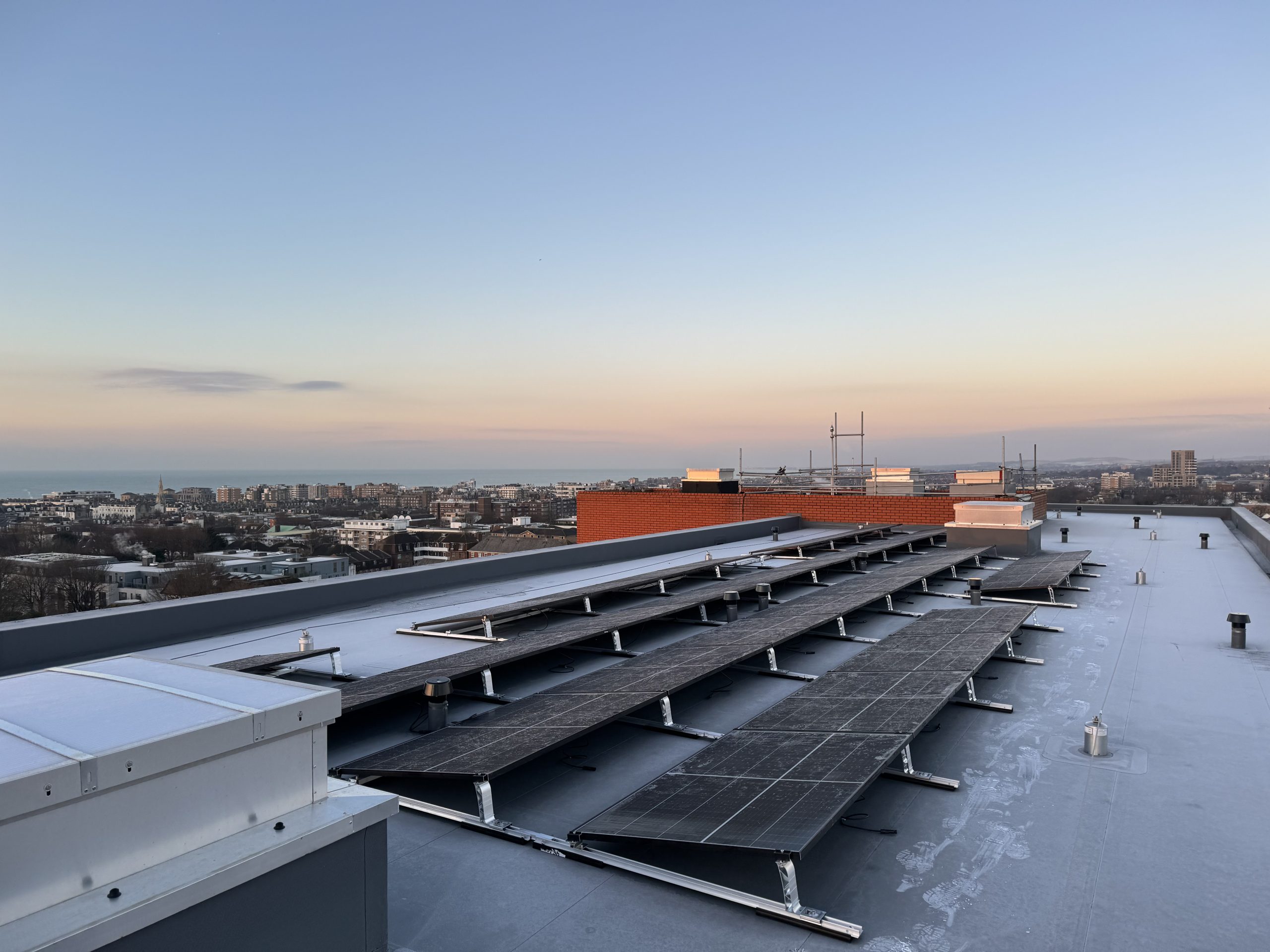
Following a detailed site assessment and wind load analysis, we specified a K2 Flat Roof Mounting System, incorporating a combination of ballasted and mechanically fixed supports to provide the optimum balance between structural integrity, roof loading and resistance to uplift forces.
Project Overview
- Location: Brighton, East Sussex
- Installation Type: Large Commercial Flat Roof Solar PV
- Mounting System: K2 Flat Roof System
- Installation Method: Hybrid Fixed & Ballasted Design
- Environment: Exposed Coastal Location
- Services: Design, Installation, Testing & Commissioning
Designing for High Wind Loads
Buildings located close to the coast are subject to significantly higher wind pressures than inland sites. These conditions require a more detailed engineering approach than a standard flat roof installation.
Using the K2 design methodology, our engineers assessed:
- Building height and roof geometry
- Coastal wind exposure
- Edge and corner uplift zones
- Structural load limitations
- Ballast requirements
- Mechanical fixing locations
- Safe maintenance access routes
Rather than relying solely on ballast, the system was engineered using a hybrid solution. Mechanically fixed mounting points were strategically incorporated in areas experiencing the highest uplift forces, while ballasted mounting was used across the remaining roof areas to minimise additional structural loading and reduce roof penetrations where appropriate.
Why the K2 Mounting System?
The K2 flat roof system is one of the industry’s leading mounting solutions, offering exceptional flexibility for complex commercial installations.
Its benefits include:
- Aerodynamic design to reduce wind uplift
- Optimised ballast calculations
- High-strength aluminium construction
- Corrosion-resistant components, ideal for coastal environments
- Flexible configuration for both fixed and ballasted installations
- Long-term durability with minimal maintenance requirements
Delivering a Reliable Long-Term Solution
Every aspect of the installation was completed to the highest standard, with careful attention given to panel alignment, cable management and roof detailing.
The hybrid mounting approach provides:
- Enhanced resistance to coastal wind conditions
- Reduced structural loading where possible
- Secure long-term performance
- Protection of the existing roof waterproofing
- Compliance with manufacturer guidance and engineering best practice
Benefits Delivered
- High-performance renewable energy generation
- Engineered specifically for a high wind coastal location
- Optimised combination of mechanical fixings and ballast
- Reduced operational energy costs
- Lower carbon emissions
- Professional installation by experienced solar engineers
- Robust system designed for decades of reliable operation
Engineering Beyond the Installation
At SES, we don’t believe every roof should be treated the same. Each project begins with a thorough engineering assessment to ensure the mounting system is appropriate for the building, its structure and its environment.
For exposed coastal projects such as this installation in Brighton, our focus extends beyond simply fitting solar panels—we engineer complete systems that are safe, compliant and built to withstand the challenges of their location.